
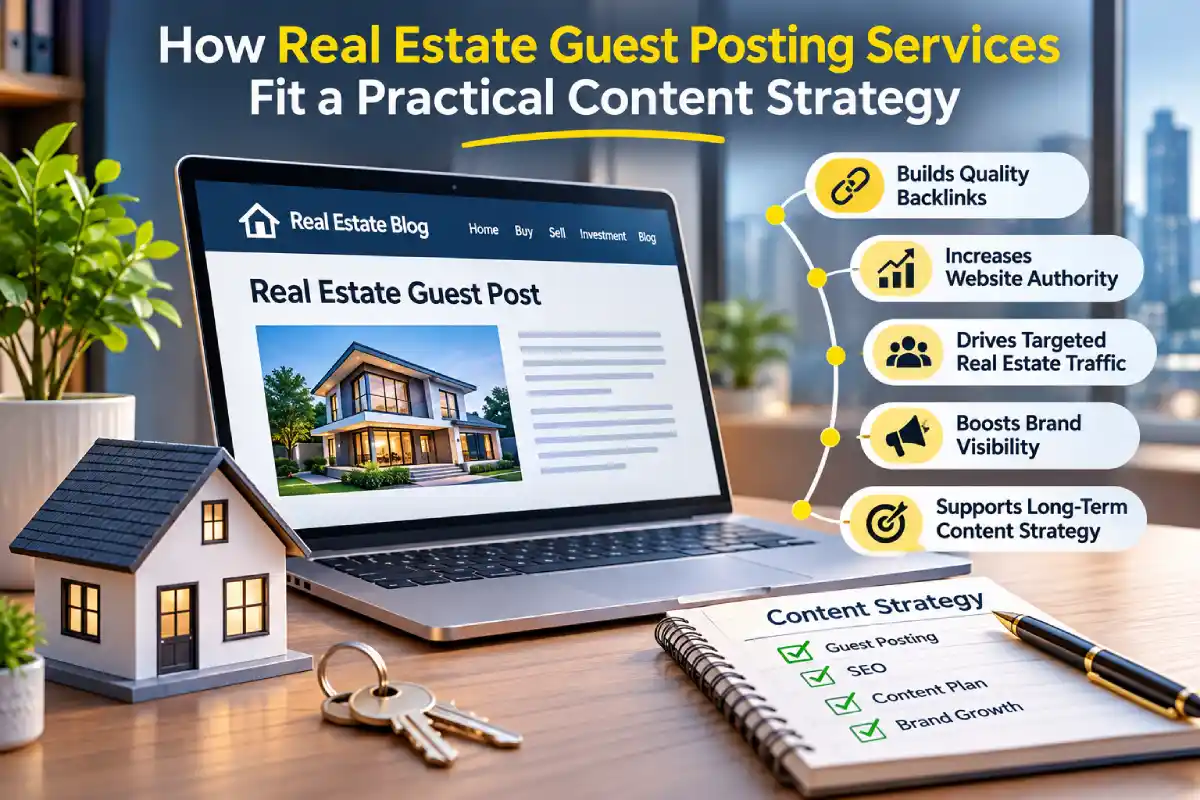
How Real Estate Guest Posting Services Fit a Practical Content Strategy – Real estate businesses depend on local knowledge, but a useful online presence has to reach people before they are ready to speak with an agent, property manager, or developer. Real estate guest posting services can help place expertise in front of readers on other websites. The value, though, comes from choosing relevant publications and contributing information people can use—not simply collecting links.
Start with the reader, not the placement
A guest article should answer a question that matters to the publication’s audience. A first-time buyer may need a clear explanation of closing costs. A landlord might want to understand how to prepare a property for winter, while a small business owner could be comparing commercial lease terms. These are distinct needs, and each calls for a specific, useful article rather than a general pitch about a company.
Before approaching a site, identify the intended reader and the practical question the piece will address. Then check whether the publication regularly covers property, home ownership, local business, construction, or another closely related subject. A site’s general audience and editorial approach matter more than a large visitor figure in isolation.
For a property business, a relevant placement could be on a local lifestyle publication, a home-improvement site, or a business resource that serves landlords and commercial tenants. A contribution about evaluating flood risk, for example, should go where readers are likely to benefit from that information. The connection between the topic and the publication should be clear without a forced sales message.
Choose topics that show real expertise
Real estate advice can quickly become vague. “Tips for buying a home” is broad; “questions to ask when comparing older homes in a cold climate” gives the writer a more useful scope. Specificity helps the reader understand what to do next and gives the contributor room to explain limitations. A local agent, for instance, can describe common inspection questions without implying that every property or jurisdiction follows the same rules.
Good contributions distinguish general guidance from professional advice. Property taxes, disclosure requirements, tenancy rules, and building standards vary by location and can change. Writers should verify local details, state the relevant geography, and avoid presenting a personal observation as a universal rule. When a claim depends on a current regulation or market figure, provide its context in the prose and keep it up to date.
Useful formats include checklists, explanations of a process, comparisons of common options, and case studies with identifying details removed. Each format should solve a defined reader problem. A checklist can help someone prepare for a viewing; a process guide can explain what happens between an accepted offer and closing. Neither needs to turn into a disguised company brochure.
Assess publication quality before investing time
Review several recent articles before submitting a pitch. Look for consistent editorial standards, clear authorship, original reporting or expertise, and a real connection to the topics the site claims to cover. Consider whether its articles help readers or mainly exist to host promotional copy. A placement on an unrelated site may provide little audience value even if the site appears active.
It is also worth asking how the publication handles edits, author biographies, links, and updates. Agreeing on the topic and intended reader before writing reduces the chance of producing an article that does not fit. Any link should support the reader’s next step or provide useful context; it should not interrupt the explanation or make claims the article has not earned.
When comparing providers, examine the process as well as the proposed outlet list. Real estate guest posting services are one possible way to source placements, but buyers should still assess relevance, editorial control, expected deliverables, and reporting. Ask what sites are considered suitable, whether the article is written or supplied by the client, and what happens if a proposed publication changes its requirements. Clear answers make it easier to judge whether the work fits a broader publishing plan.
Make the destination useful, too
A guest article can introduce readers to a business, but the destination page needs to continue the conversation. If the article explains how to prepare a rental property for a new tenant, a link to a relevant property-management page is more helpful than a generic homepage. The destination should explain the service plainly, identify who it is for, and offer a sensible next step without making the reader hunt for basic information.
That experience depends partly on the site itself. Pages should load reliably, work on mobile screens, and make contact options easy to find. If a real estate company is planning a new website or a more interactive property search, it may need a front-end developer to build and refine the user-facing features. Osdire’s guide to hiring a developer discusses skills, project scope, and front-end developer rates. Those rates are one part of budgeting; the required features, timeline, and testing work also shape the overall cost.
Measure outcomes without reducing everything to links
Set a modest purpose for each contribution before it goes live. A campaign might aim to reach local landlords, answer a recurring buyer question, or introduce a new service to a relevant audience. After publication, review available referral visits, enquiries, and reader engagement alongside the quality of the placement. A small number of well-matched readers may be more valuable than broad exposure with no meaningful response.
Keep a record of publication dates, topics, destinations, and any follow-up needed. This makes it easier to avoid repeating the same article angle and to update advice when local conditions change. It also helps a business see which subjects deserve a deeper resource of their own.
Guest contributions work best as one part of a consistent content effort. A clear reader need, credible expertise, a suitable publication, and a useful destination page give each article a reason to exist. For real estate businesses, that approach builds familiarity through practical information—and makes every placement easier to evaluate on its actual merits.