

Artificial intelligence has quietly become part of everyday operations. It flags issues, predicts outcomes, and removes a lot of repetitive work that used to slow teams down. In many cases, it’s doing that well. But there’s a part no one really talks about.
Even with all that intelligence, nothing actually moves unless people coordinate in real time. That hasn’t changed, and it’s not going to.
The Limits of Automation in the Real World
AI works best when the environment is controlled. Clean data, predictable inputs, defined outcomes. That’s the ideal setup. Most real-world operations look nothing like that.
On a construction site, things shift constantly, such as weather, delays, and safety issues. At events, crowd behaviour changes without warning. In logistics, one late delivery can throw off an entire schedule. These are fast-moving situations where decisions can’t sit in a system waiting to be processed.
AI can highlight a problem. It can even suggest the next step. But it doesn’t execute anything. People do. And if those people aren’t connected instantly, the insight loses value almost immediately.
Findings from McKinsey & Company have already pointed out that execution speed, not just decision quality, is what separates efficient operations from failing ones. That gap is almost always a communication issue.
Where Things Actually Break Down
There’s an assumption that modern tools have “solved” communication. They haven’t.
Most platforms, such as messaging apps, dashboards, and collaboration tools, depend on a stable internet. That works fine in offices. It breaks down quickly in environments where connectivity is inconsistent or overloaded. And when that happens, everything slows down.
This is why many teams still rely on parallel communication systems that don’t depend on network conditions. Not because they’re resistant to change, but because they’ve learned the hard way that reliability matters more than convenience.
Even with edge devices handling data locally, teams on the ground still lean on direct communication systems to act immediately. When timing is tight, simple and dependable communication outperforms advanced or smart systems that lag or are delayed.
AI Doesn’t Remove Friction, It Exposes It
There’s a lot of noise around AI eliminating inefficiencies. In reality, it tends to expose them.
Take a disruption in a logistics chain. AI can detect it instantly and recommend a fix. But that fix still needs to be communicated clearly and fast to multiple people in different locations. If that coordination is slow, the whole system backs up.
That’s where many AI-driven strategies fall apart. They improve decision-making but ignore what happens after the decision is made. Strong operations don’t make that mistake. They treat coordination as a core layer, not an afterthought.
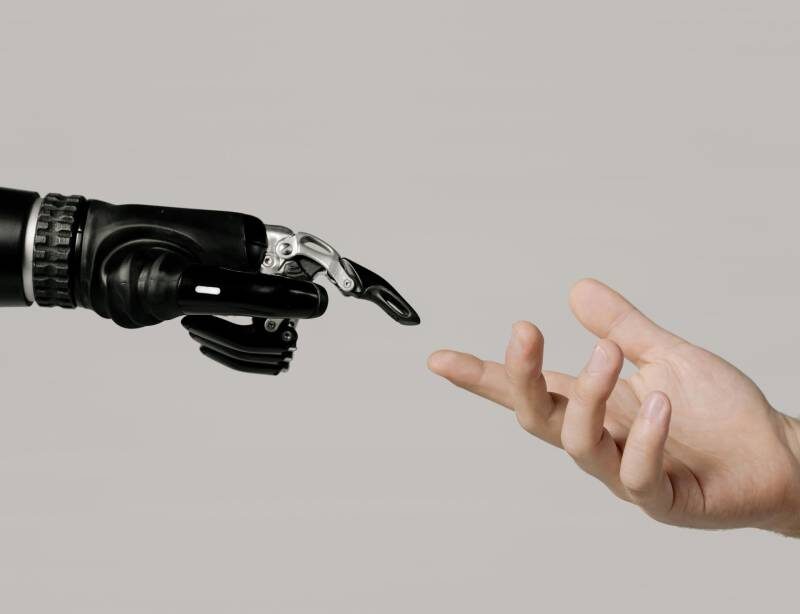
Closing the Gap Between Insight and Action
Some companies are starting to adjust their approach. Instead of relying entirely on digital systems, they’re building setups that combine intelligence with reliability.
That usually means pairing cloud tools with communication systems that don’t fail when connectivity does. In environments where response time matters, that layer becomes critical. In practice, this is where solutions like Roadphone come into play, supporting teams that can’t afford delays, miscommunication, or downtime.
The goal isn’t to replace modern systems. It’s to make sure they don’t collapse under pressure.
Rethinking Digital Transformation
Most digital transformation strategies lean heavily toward software, such as AI models, automation tools, and data platforms. All of that matters, but it’s only part of the picture.
Communication is what ties everything together, and it’s often treated as secondary. That’s a mistake. Without reliable coordination, even the most advanced systems struggle to deliver consistent results. Things work when conditions are perfect, but fall apart when they’re not.
A more practical approach is balanced. Use AI to improve decision-making, but invest just as seriously in how those decisions get executed.
The Reality Behind “Always-On”
There’s a tendency to believe modern systems are always available. In reality, they’re not. Networks fail. Systems go down. Conditions change. And when they do, the ability to communicate quickly becomes the difference between recovery and disruption.
Redundancy often gets dismissed as inefficiency. But it isn’t. In reality, it’s what keeps operations moving when the primary system fails. Even in highly digitised environments, real-time coordination is still the backbone of execution. That hasn’t been replaced, just overlooked.
Final Thought
AI will keep improving. It will get faster, more accurate, and more deeply embedded into operations. But it won’t replace coordination.
At some point, every system still depends on people being able to respond, align, and act without delay. The companies that understand this build for it. The ones that don’t end up with systems that look impressive, but fail when it matters most.
Also Read: Top 5 Fastly CDN Alternatives in 2026